
The 5 Biggest Sports Failures and Lessons to Learn
Quick summary:
Notable failures in sports are not just defeats, but opportunities to learn. Here are 5 famous examples and the lessons they teach us:
-
Jean Van de Velde (Golf, 1999): Poor pressure management on the final hole of The Open Championship.
Lesson: Adopt a thoughtful strategy under pressure. -
French National Team (Football, 2010): Internal crisis and failing leadership at the World Cup.
Lesson: Communication and leadership are essential to collective success. -
Greg Norman (Golf, 1996): Mental collapse at the Masters despite a comfortable lead.
Lesson: Mental resilience is crucial for handling big moments. -
Jana Novotna (Tennis, 1993): Emotional defeat in the Wimbledon final, followed by a comeback in 1998.
Lesson: Perseverance can turn a defeat into a triumph. -
French Basketball Team (EuroBasket, 2005): Close defeat against Greece due to critical errors.
Lesson: Collective discipline outweighs individual exploits.
Comparative table of failures and lessons:
| Event | Main problem | Key lesson |
|---|---|---|
| Jean Van de Velde (1999) | Poor strategic choice | Thoughtful strategy under pressure |
| French National Team (2010) | Internal conflicts | Importance of leadership and communication |
| Greg Norman (1996) | Mental collapse | Strengthen mental resilience |
| Jana Novotna (1993) | Errors in key moments | Perseverance in the face of failure |
| French Basketball Team (2005) | Lack of collective discipline | The power of the collective is paramount |
These stories show that even the greatest defeats can become springboards for success. Every mistake, if analyzed and understood, can pave the way for better performance in the future.
The secrets of a champion to excel in life: Martin Fourcade
1. Jean Van de Velde: The collapse at the Open Championship 1999
On July 18, 1999, on the Carnoustie course, Jean Van de Velde, ranked 152nd in the world, was one step away from making his name in the history of French golf. With a three-stroke lead on the final hole, he only needed to finish with a double-bogey (6 strokes) to win The Open Championship.
But risky choices turned this historic moment upside down.
"I think the only thing that could put him in trouble is sending the ball into the burn." - Bob Rosburg, ABC commentator
At the start of hole n°18, instead of playing it safe with an iron, he opted for his driver. His second shot bounced off the stands to land in the tall grass, and his third ended up in the Barry Burn, a stream that crosses the course.
The decisive mistakes:
- Choosing the driver at the start instead of a safer shot
- Trying to reach the green on the second shot despite the risks
- Not playing it safe after the first failures
"The real mistake was on the third shot. I tried to go forward. There was only one thing to avoid: putting the ball in the water." - Jean Van de Velde
The most striking image remains that where he took off his shoes, ready to play from the stream. Finally, he opted for a drop, then sent his ball into a bunker, then succeeded with a 1.8-meter putt for a triple-bogey (7 strokes). This led him to a playoff which he lost against Paul Lawrie.
This episode illustrates how poor pressure management can turn a victory into a defeat.
Tips for better pressure management:
- Adopt a thoughtful approach rather than an emotional one
- Follow a consistent routine before each shot
- Focus on execution rather than the final result
- Adjust your strategy according to the circumstances
This experience highlights the importance of stress management and decisions under pressure. It also reminds us that every mistake can become an opportunity to learn, a principle applicable far beyond sports.
2. The French National Team: The collapse at the 2010 World Cup
The 2010 World Cup in South Africa remains marked as one of the darkest episodes in French football. Everything turned during the match against Mexico, where an altercation broke out at halftime between Nicolas Anelka and coach Raymond Domenech. This argument led to Anelka's exclusion, causing a major upheaval within the team.
William Gallas, an iconic defender, openly criticized the management of the team. He stated: "Domenech was not open – several players, myself included, struggled to talk to him". Even the training sessions, according to him, were far from satisfactory.
Immediate consequences
The events quickly followed, turning a tense situation into a real crisis:
| Event | Impact |
|---|---|
| Exclusion of Nicolas Anelka | Boycott of training by the players |
| Defeat against South Africa | Elimination in the first round |
This debacle took on a national scale, sparking harsh criticism and a feeling of shame.
"I told the players they had tarnished the image of France. It's a moral disaster for French football. I told them they could no longer be heroes for our children. They destroyed the dreams of their compatriots, their friends, and their supporters."
Disciplinary sanctions
The sanctions were severe for the main protagonists:
- Nicolas Anelka: 18-match suspension
- Patrice Evra: 5-match suspension
- Franck Ribéry: 3-match suspension
- Jérémy Toulalan: 1-match suspension
Underlying problems
This crisis revealed deeper fractures in French football, notably ethnic and religious tensions within the team. Raymond Domenech's leadership was widely criticized. Alain Finkielkraut called the team "thugs... with a mafia ethic", while Zinédine Zidane delivered: "Domenech was not a coach".
This episode illustrates how much a lack of communication and leadership can lead to failure, not only in football, but in any organization under pressure.
sbb-itb-840709f
3. Greg Norman: The collapse at the 1996 Masters
The 1996 Masters remains engraved as one of the greatest collapses in the history of golf. Greg Norman, former world number one for 331 weeks, approached the final round with a six-stroke lead over Nick Faldo. Yet, the pressure was already palpable. Norman himself admitted that he hadn't slept a wink all night. Mental tension played a crucial role in this outcome.
During this final round, his lead gradually eroded: from six strokes, it went to five, then to three, before falling to two. The mistakes accumulated. A double bogey at the 12th hole, followed by another at the 16th, marked the end of his hopes. These moments illustrate how pressure can affect judgment, a point often highlighted by specialists.
The psychological factors
Dr. Fran Pirozzolo, neuroscientist and sports psychologist, analyzed Norman's state of mind, which he calls "pre-wired" or a "fixed mindset". He explains:
"You had in Greg a pre-wired mentality for what is often called a 'fixed mindset'. A person with a fixed mindset believes: 'Either I am good at this, or I am not. If I fail, it's because something is missing from my whole self.' But the problem is that this is not a growth mindset. Having this fixed attitude limits your ability to deal with the events that happen to you."
Journalist David Casstevens described the scene with a striking image:
"It was like watching a man drown. As Norman approached Amen Corner, we wanted to throw him a rope, a lifebuoy. Here, Greg, catch it."
The lessons of failure
Greg Norman himself drew lessons from this experience. He explained:
"I was not 100% prepared for the responsibility that awaited me. I told my children afterwards: 'When you are faced with an important situation like this, you must be strong enough to compartmentalize all the shit going on in your head.' I paid a high price for not knowing how to compartmentalize my emotions."
This memorable defeat shows how much pressure can destabilize even the greatest athletes. Norman finished with a score of 78 (+6), while Faldo signed a card of 67 (–5), widening a final gap of 11 strokes.
4. Jana Novotna: The 1993 Wimbledon final
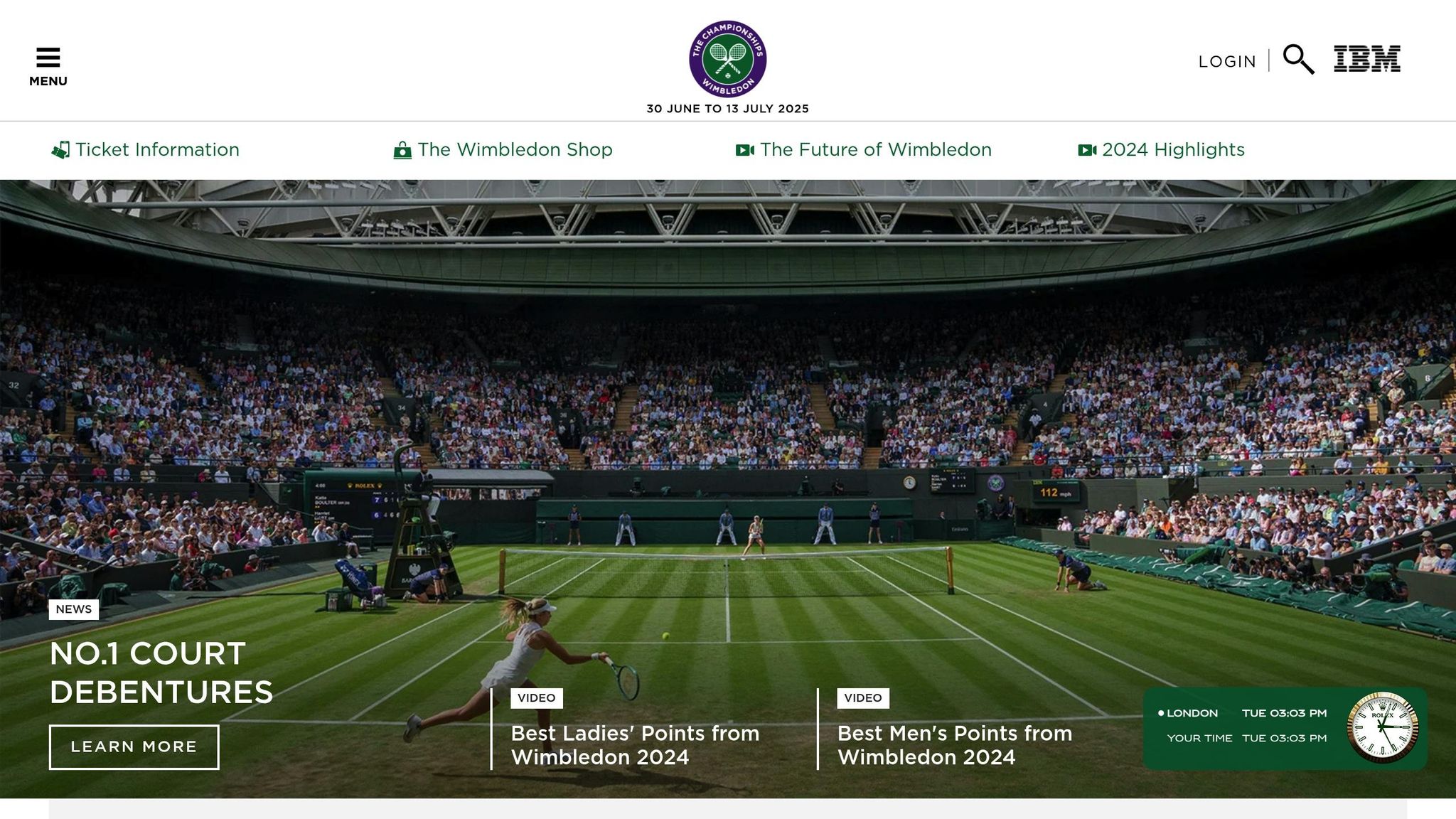
The 1993 Wimbledon final remains one of the most memorable moments in the history of tennis. Jana Novotna, in a dominant position against Steffi Graf with a score of 6–7, 6–1, 4–1 in the final set, seemed ready to win her very first Grand Slam title. But an unexpected turnaround changed everything.
The decisive turning point
While she had the opportunity to widen the gap to 5–1 thanks to a break point, a double fault on her serve reversed the dynamic. Graf took advantage of it to string together five consecutive games and seize the title.
A defeat charged with emotion
Novotna's defeat left an indelible mark, especially during the trophy presentation ceremony. In tears, she took refuge on the shoulder of the Duchess of Kent. The latter addressed her with comforting words:
"I know you will win it one day, don't worry."
Faced with questions about her mistakes, Novotna answered frankly:
"I wanted to win by myself, instead of waiting for Steffi to lose. Unfortunately, she started to play better and I didn't. Does that make me a choker? How many chokers make it to the Wimbledon final?"
A revenge on destiny
This defeat marked a turning point in her career.
"For me, it was the best thing that ever happened in my life."
Despite a new disappointment in the 1997 final against Martina Hingis, Novotna never gave up. Her perseverance finally paid off in 1998 when she triumphed at Wimbledon, thus becoming the oldest player in the Open era to win her first Grand Slam title.
Her exceptional journey shows how to turn a defeat into a driving force to move forward. This path, mixing intense emotions and determination, proves that failure can become a key step towards success, provided you face it with courage and lucidity.
5. French Basketball: The 2005 EuroBasket semi-final
The 2005 EuroBasket semi-final between France and Greece remains engraved as one of the most striking defeats in French basketball. Greece won by a narrow margin, 67-66, preventing the Bleus from reaching a historic final.
A match that says a lot
Tony Parker shone with 20 points, but that was not enough to compensate for the 21 French turnovers, compared to only 10 for Greece. Despite a better shooting percentage (43.4% vs 39.1%) and dominance on the boards (40 vs 37), these favorable statistics did not allow them to overcome the Greek discipline and composure. These elements clearly made the difference in this close duel.
A champion mentality on the Greek side
"This is what makes you a champion. Just finding a way to win on a bad day. It's easy to defeat somebody when you are on a good day, but if you can do it on a bad day, that's how you create a championship winning team. We had that."
Theo Papaloukas' words perfectly illustrate the state of mind that allowed Greece to triumph. This mentality is based on the ability to overcome difficult moments, an essential quality in any high-level sport.
Lessons drawn from defeat
This match highlighted two essential points for French basketball:
- The management of critical moments: Knowing how to stay lucid and effective in decisive moments is essential. Talent alone is not enough.
- The power of the collective: The Greek victory relied on a collective strategy, where game intelligence took precedence over individual exploits.
This defeat, although painful, marked a turning point for French basketball, pushing the team to review its priorities and progress on the international stage.
Conclusion
The failures of figures like Van de Velde, the French National Team, Norman, Novotna, or even French basketball remind us of one essential thing: every defeat can become a valuable lesson. True success lies in the ability to learn from these difficult moments.
The power of resilience
Champions are not distinguished by the absence of failures, but by their ability to get back up. This ability to bounce back is at the heart of every success.
"I've missed over 9,000 shots in my career. I've lost almost 300 games. Twenty-six times I've been trusted to take the game-winning shot and missed. I've failed over and over and over again in my life. And that is why I succeed."
The spirit of learning
Beyond resilience, it is the ability to see failure as a learning opportunity that makes all the difference.
"I have learnt most in my life from failures and setbacks. The worst setbacks have not only motivated me but also improved me as a person, made me understand the importance of those times more than the success. It makes you sit down and think about what you need to do now, build a road map for yourself."
How to turn failure into strength
Here are some ways to benefit from failures:
- Analyze your performance: Take the time to identify what worked well, what can be improved, and what you have learned from it.
- Cultivate resilience: Accept mistakes as necessary steps, focus on your progress, and practice constructive self-assessment.
- Rely on collective effort: Support and collaboration strengthen the ability to overcome adversity.
"To be successful at anything, the truth is you don't have to be special. You just have to be what most people aren't: consistent, determined and willing to work for it."
Adopting a positive approach to failure can transform not only your way of thinking, but also your way of acting, whether in sports or in everyday life. A champion's mindset starts there.